Only 2 Indian States Give Official Status to Sanskrit — Here’s Why It Still Matters in 2026
From ancient roots to modern revival, Sanskrit gains ground in education, policy, and global interest despite limited state-level recognition.

Campus Times | Lucknow
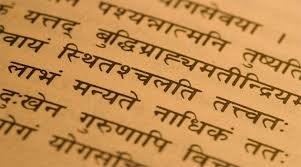
Sanskrit, one of the world’s oldest and most influential languages, continues to hold a prestigious place in India’s cultural and intellectual heritage. While it is officially recognized among the 22 scheduled languages of the Indian Constitution, its adoption at the state level remains limited.
As of 2026, only two Indian states — Uttarakhand and Himachal Pradesh — have granted Sanskrit the status of a second official language.
Uttarakhand made history in 2010 by becoming the first state to formally adopt Sanskrit for administrative purposes. Nearly a decade later, Himachal Pradesh followed suit in 2019, reinforcing efforts to revive and preserve the classical language in modern governance.
Revival Beyond Policy
Despite limited official use, Sanskrit is far from obsolete. It is widely taught in schools across India, especially under boards like CBSE, where students commonly study it between Classes 5 and 8. In some cases, it is also offered as a second language in higher classes.
Government initiatives, along with cultural organisations, have played a crucial role in promoting the language. One such organisation, Samskrita Bharati, claims to have trained over 10 million people in conversational Sanskrit and established more than 6,000 Sanskrit-speaking homes across the country.
Usage vs. Identity Gap
According to the 2011 Census, over 3.1 million Indians reported Sanskrit as a first, second, or third language. However, only 24,821 people identified it as their mother tongue. This highlights a clear gap between Sanskrit’s academic popularity and its everyday usage.
Experts believe that cultural pride and symbolic association may influence people to report familiarity with the language, even if it is not actively spoken.
Global Comeback & Digital Leap
Sanskrit’s revival is not limited to India. Universities in countries like Germany, the UK, the US, and China are increasingly offering Sanskrit studies. In a major digital milestone, the language was added to Google Translate in 2022, reflecting rising global demand.
The movement to revive Sanskrit dates back to the late 19th century, with early efforts led by organisations like the Theosophical Society. Today, it has evolved into a widespread cultural and academic mission.
Sanskrit’s Modern Relevance
Sanskrit, shaped by Panini in Ashtadhyayi, is known for its scientific structure and is now being explored in AI and language processing. Organisations like ISRO have also shown interest in its use in technical fields.
It remains essential for studying Yoga and Ayurveda, is still spoken in Mattur, and continues to influence languages like Hindi, Marathi, and Bengali.
While Sanskrit may not yet be a widely spoken language in daily life, its presence in education, governance (in select states), and global academia proves its enduring relevance. With growing institutional support and digital integration, the ancient language is steadily carving a place in the modern world.
Related to this topic: