BBAU scientists secure Indian Patent for green, metal free technology that could transform drug manufacturing
Novel one step process for producing primary amines promises cleaner pharmaceutical production, lower manufacturing costs, and stronger prospects for Indias chemical innovation ecosystem.
Campus Times | Lucknow
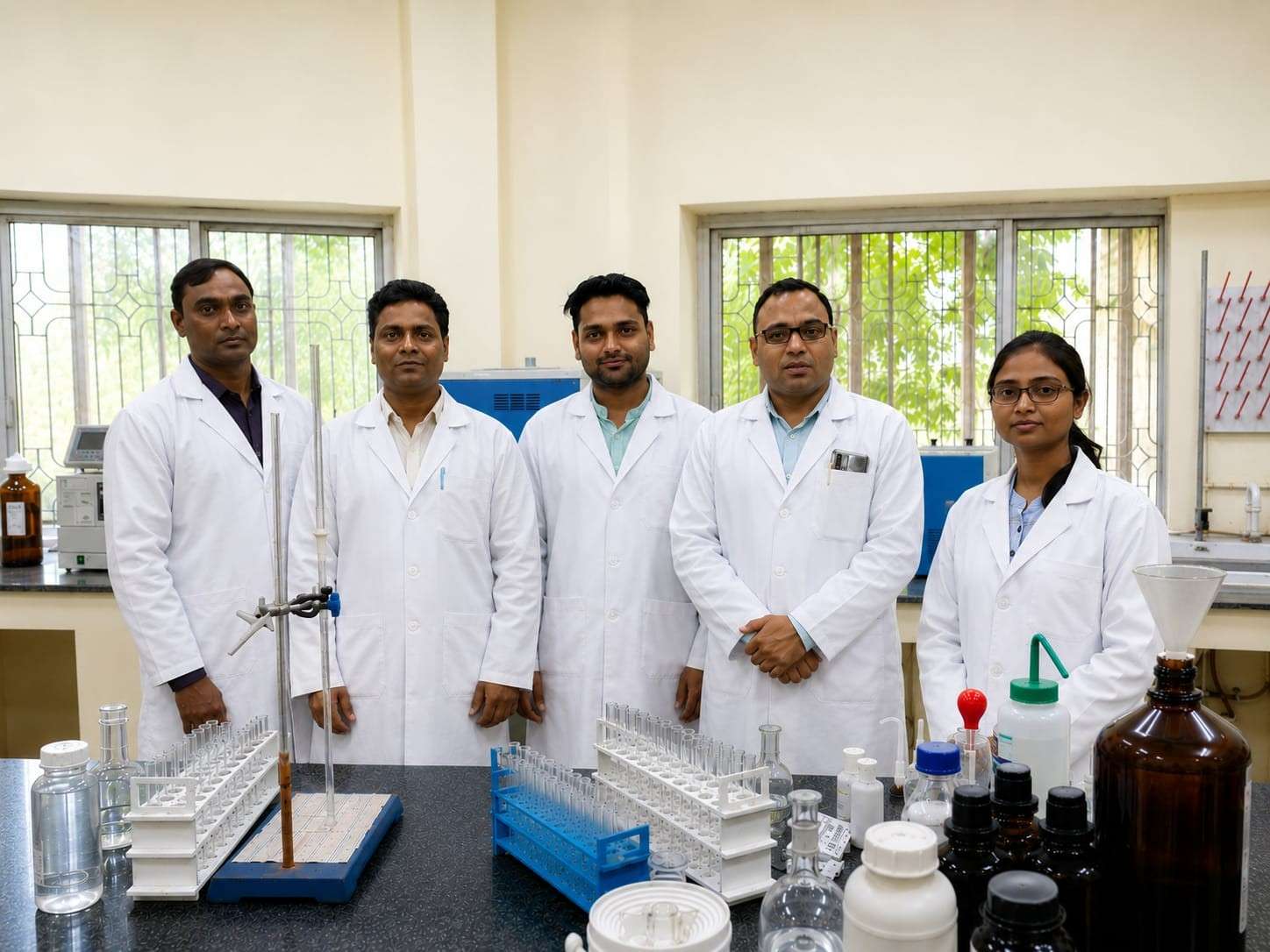
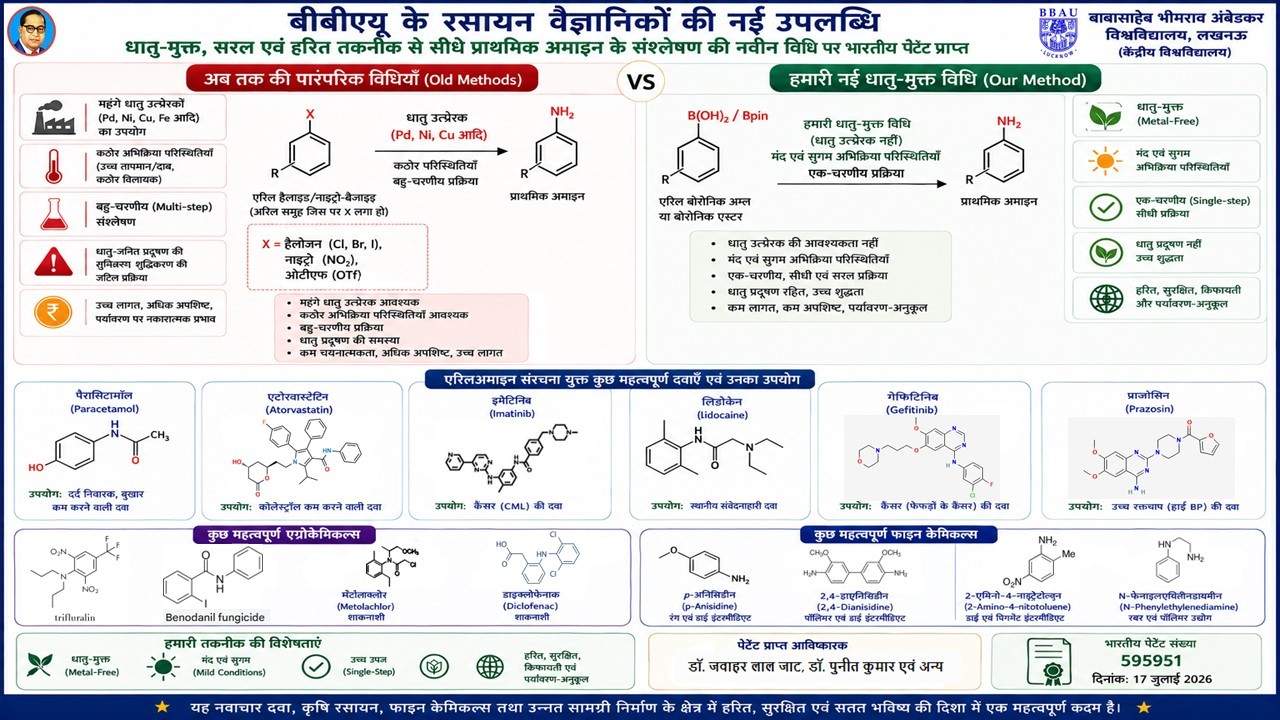
Researchers from the Department of Chemistry at Babasaheb Bhimrao Ambedkar University (BBAU), Lucknow, have secured an Indian patent for developing a sustainable, metal free technology to synthesize primary amines an essential class of compounds widely used in the production of medicines, agrochemicals, and specialty chemicals.
The patented innovation, titled Method for Metal Free Direct Transformation of Aryl Boronic Acid to Primary Amines (Patent No. 595951), was developed under the leadership of Dr. Jawahar Lal Jat, with significant experimental contributions from research scholar Dr. Puneet Kumar and the research team. The patent has been granted by the Government of Indias Patent Office.
Congratulating the researchers, BBAU Vice Chancellor Prof. Raj Kumar Mittal described the achievement as a significant milestone for the university and a testament to its growing contribution to cutting-edge scientific research.
Primary amines are indispensable building blocks in modern organic chemistry and are extensively used in the synthesis of antibiotics, anticancer drugs, antidiabetic medicines, cardiovascular therapies, neurological drugs, pesticides, dyes, polymers, and several high value industrial chemicals. However, conventional manufacturing methods largely depend on expensive metal catalysts such as palladium, nickel, copper, and iron, often leading to higher production costs, additional purification requirements, and concerns over metal contamination.
The newly patented BBAU process offers a cleaner alternative by enabling the direct conversion of aryl boronic acids into primary amines without using any metal catalyst. The single step reaction operates under mild conditions, making the process simpler, cost effective, and environmentally friendly while delivering high purity products free from residual metal contamination.
The innovation aligns closely with the principles of Green Chemistry, promoting safer chemical processes with reduced waste and lower environmental impact. Scientists believe the technology has strong industrial potential, particularly for pharmaceutical manufacturing, where stringent quality standards require minimal trace metal impurities.
Beyond reducing production costs and improving process efficiency, the patented method could enhance Indias capabilities in pharmaceutical and specialty chemical manufacturing. It is also expected to encourage technology transfer, industry academia collaborations, and startup driven commercialization while supporting national initiatives such as Atmanirbhar Bharat and Make in India.
Related to this topic: